Imaging Grading: a workflow for blinded review
A quality review gate and tokenised grading workspace bring blinded image review into the clinical data workflow.
The problem
Clinical image review creates two different information needs. Data managers need to trace an image back to its study record. Independent readers need to assess it without seeing identifiers or device attribution that could influence their judgement.
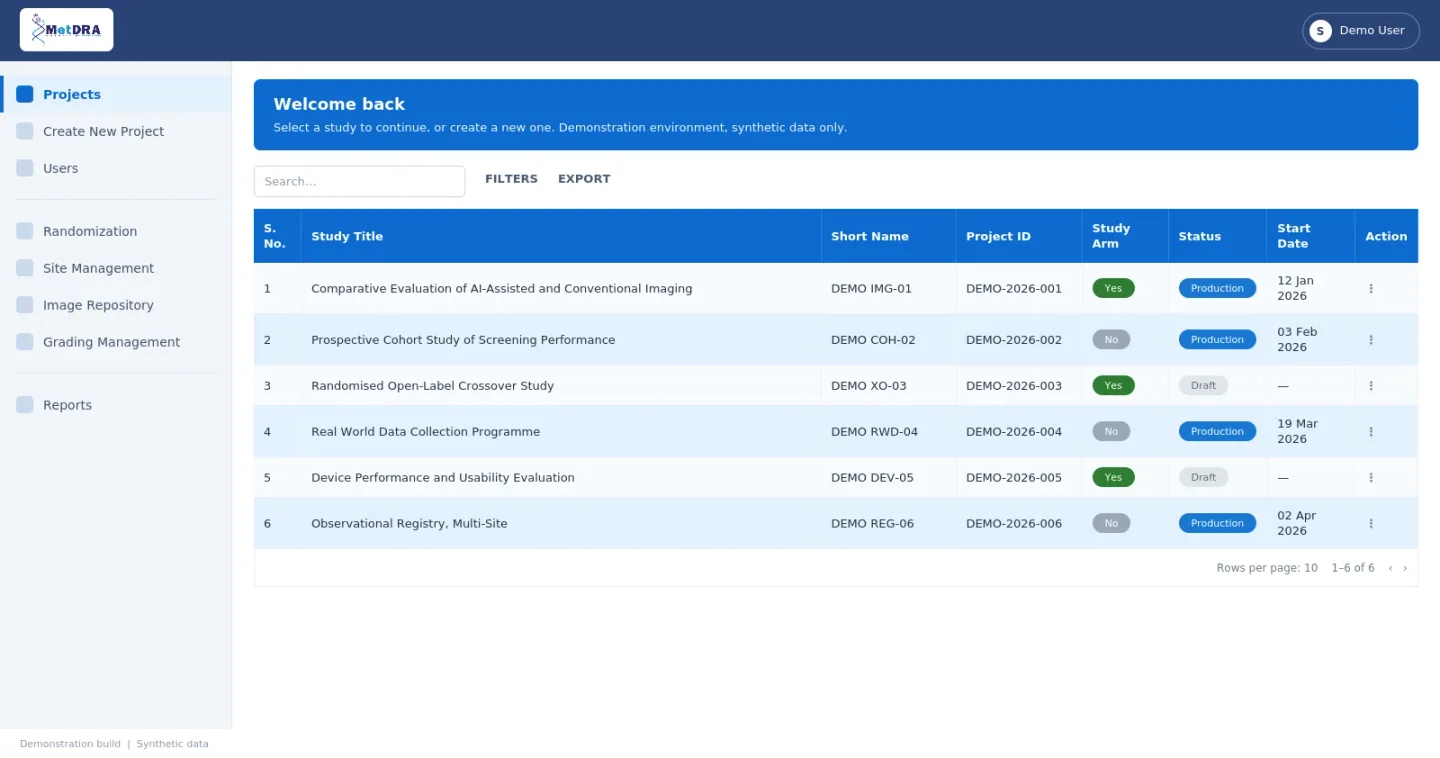
The product challenge was to support both views inside the clinical platform. This workflow combines study context, a monitor's quality decision and a separate blinded grading workspace. The screenshots use demonstration data.
Check quality before grading
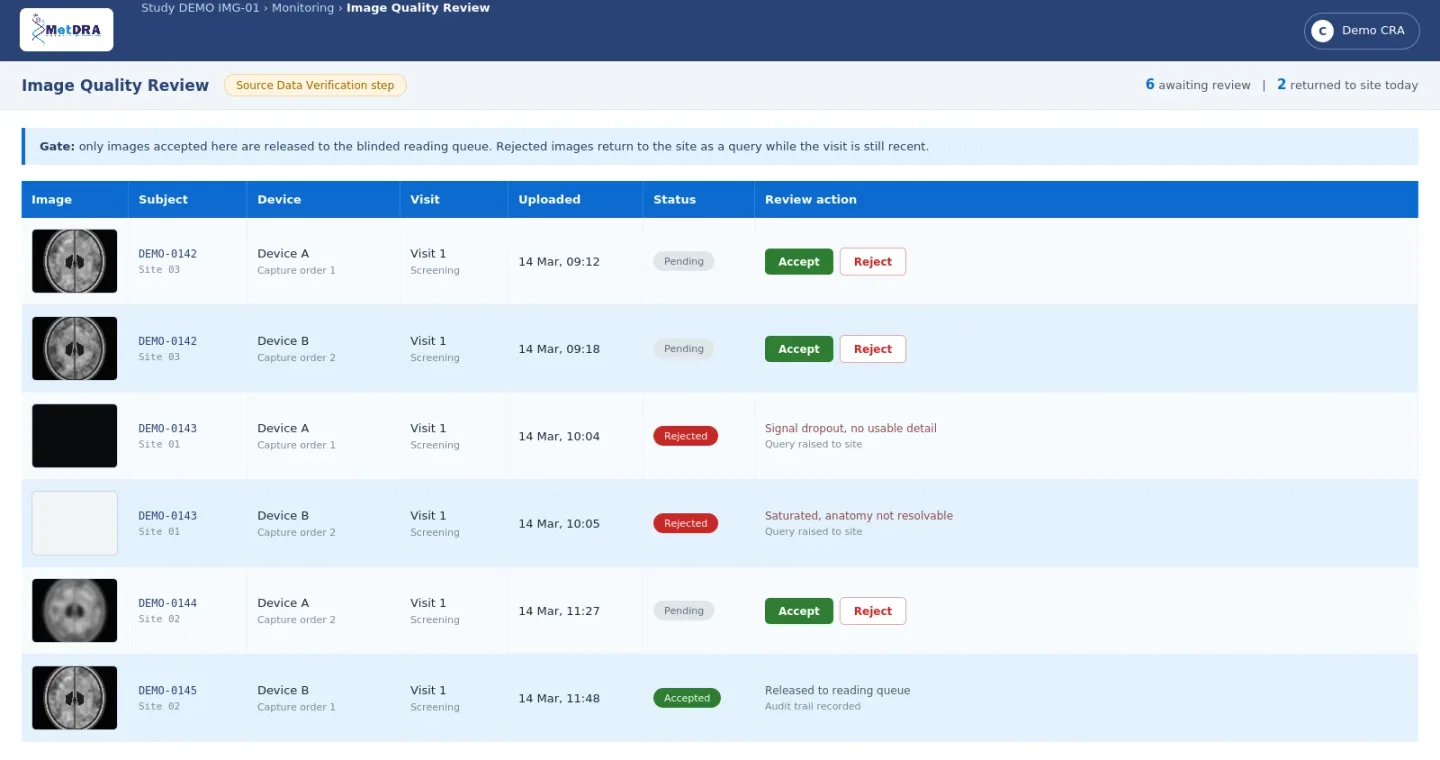
An image can be correctly uploaded and still be unsuitable for review. The workflow places an acceptance or rejection decision at source data verification, before the image enters the blinded reading queue.
Attaching this decision to an existing monitor workflow keeps quality review close to the source record. A rejection can be explained through a reason and followed up through the query process.
Keep traceability and reader access separate
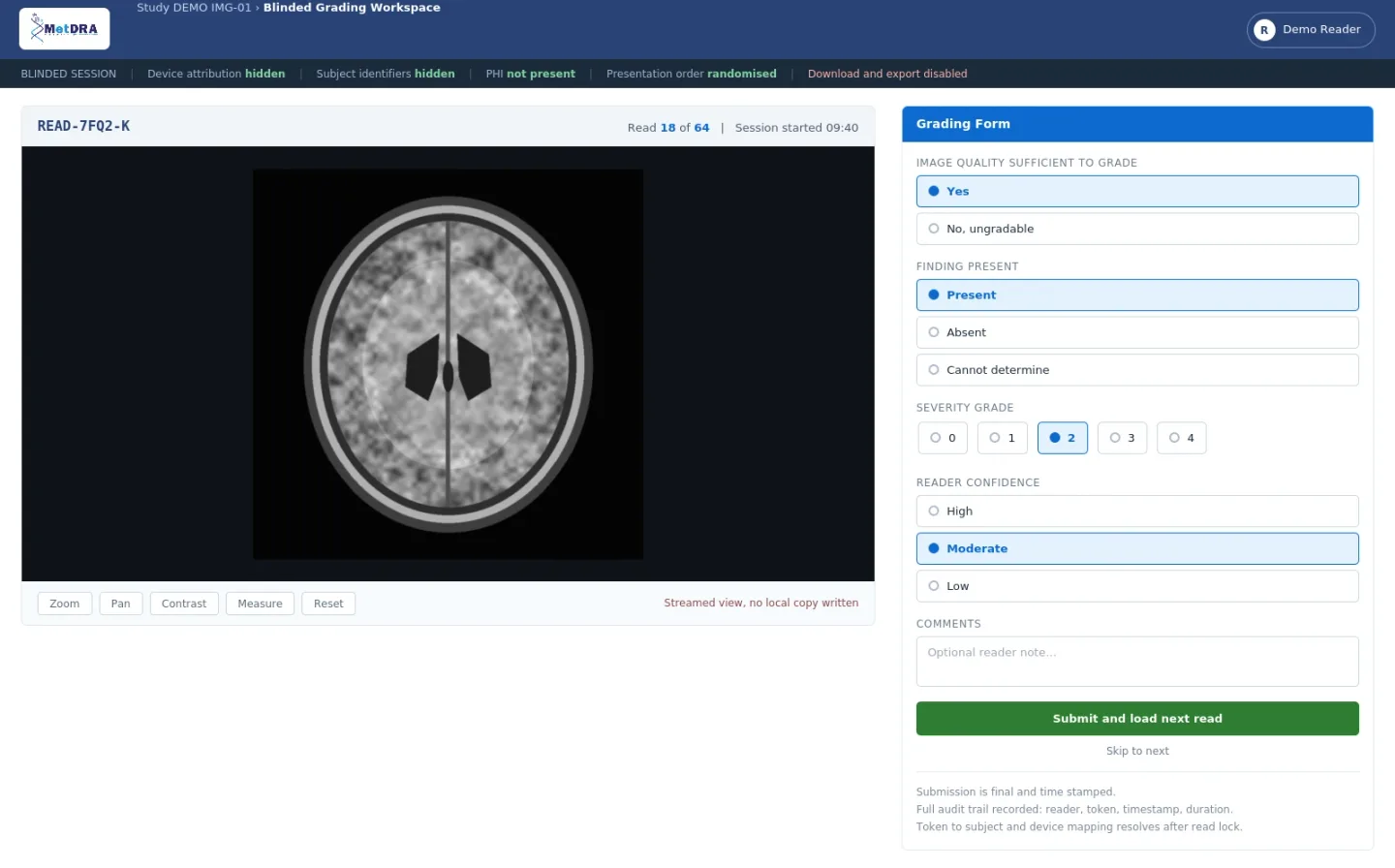
The design centres on one image record with different views for different roles. Operational users work with study context. Readers work with a token, the image and a structured grading form. Their workspace hides subject identifiers and device attribution.
The grading form captures image quality, finding, severity grade and reader confidence. It gives the reader a defined task without exposing the wider operational record.
Design beyond a single study
The accompanying product account describes a build prompted by a comparison between two devices. The reusable pattern is broader: capture an object, check its quality, restrict attribution and collect an independent assessment.
Keeping those steps separate from the imaging modality provides a basis for future configuration. This is a design direction, rather than evidence that every modality has been implemented or validated.
What this case demonstrates
This work shows how a clinical requirement becomes a product workflow: role-specific information, an explicit quality gate and structured grading. The screenshots illustrate the interface; measured efficiency gains and study outcomes are outside the evidence available for this account.
Inside the platform
Inside this workflow
Real interfaces with demonstration data. Select a screen for a closer look.
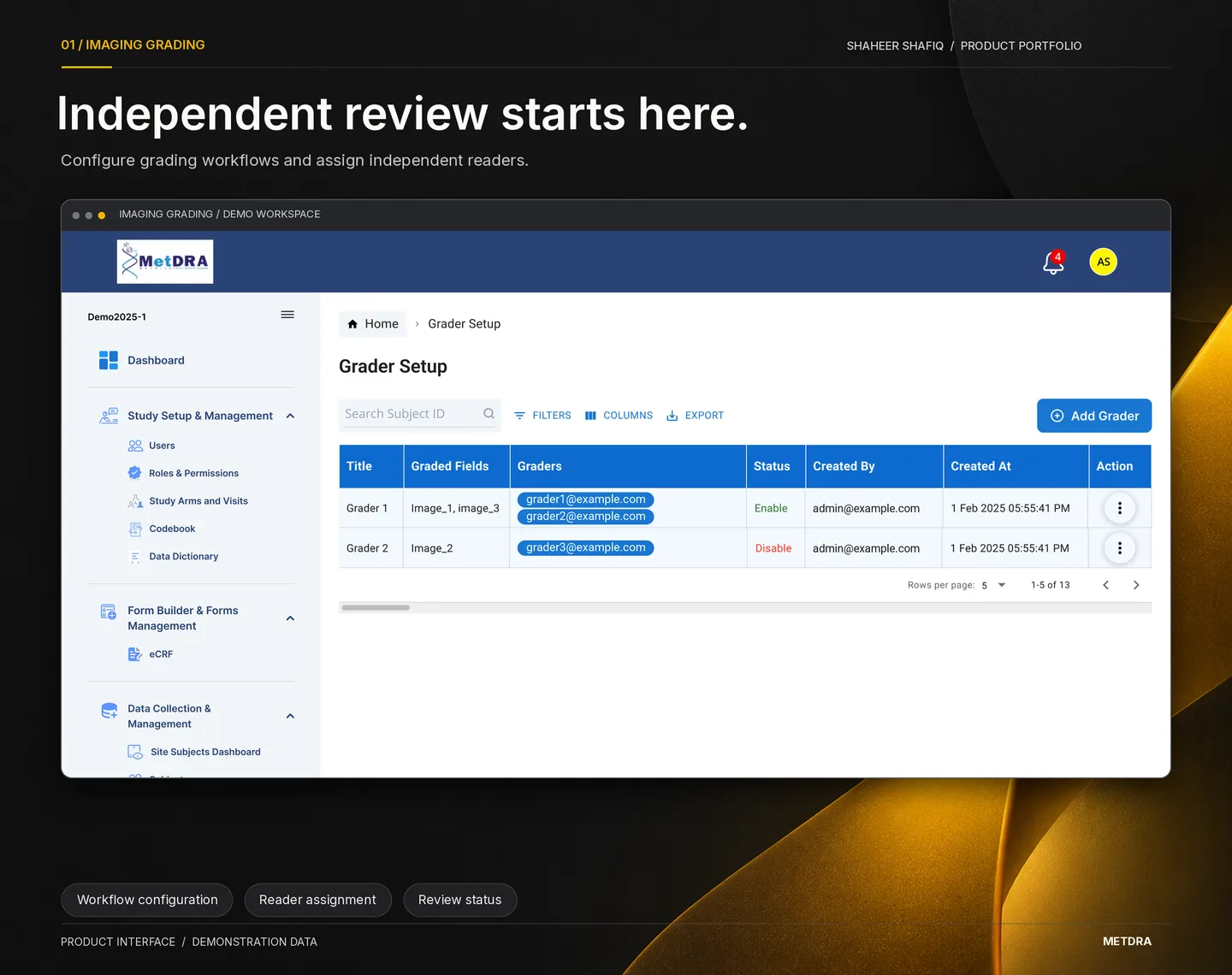
Independent review starts here.
Configure grading workflows and assign independent readers.
Every review, in one queue.
Track image grading requests and completion status.
Reader decisions, side by side.
Compare independent assessments in a clear results view.